
A forecourt is more than spare space outside a shop. Used well, it can catch attention, explain an offer and give passers-by a reason to stop. These affordable ideas help independent retailers improve visibility, create a welcoming entrance and turn everyday pavement traffic into genuine store visits and sales.
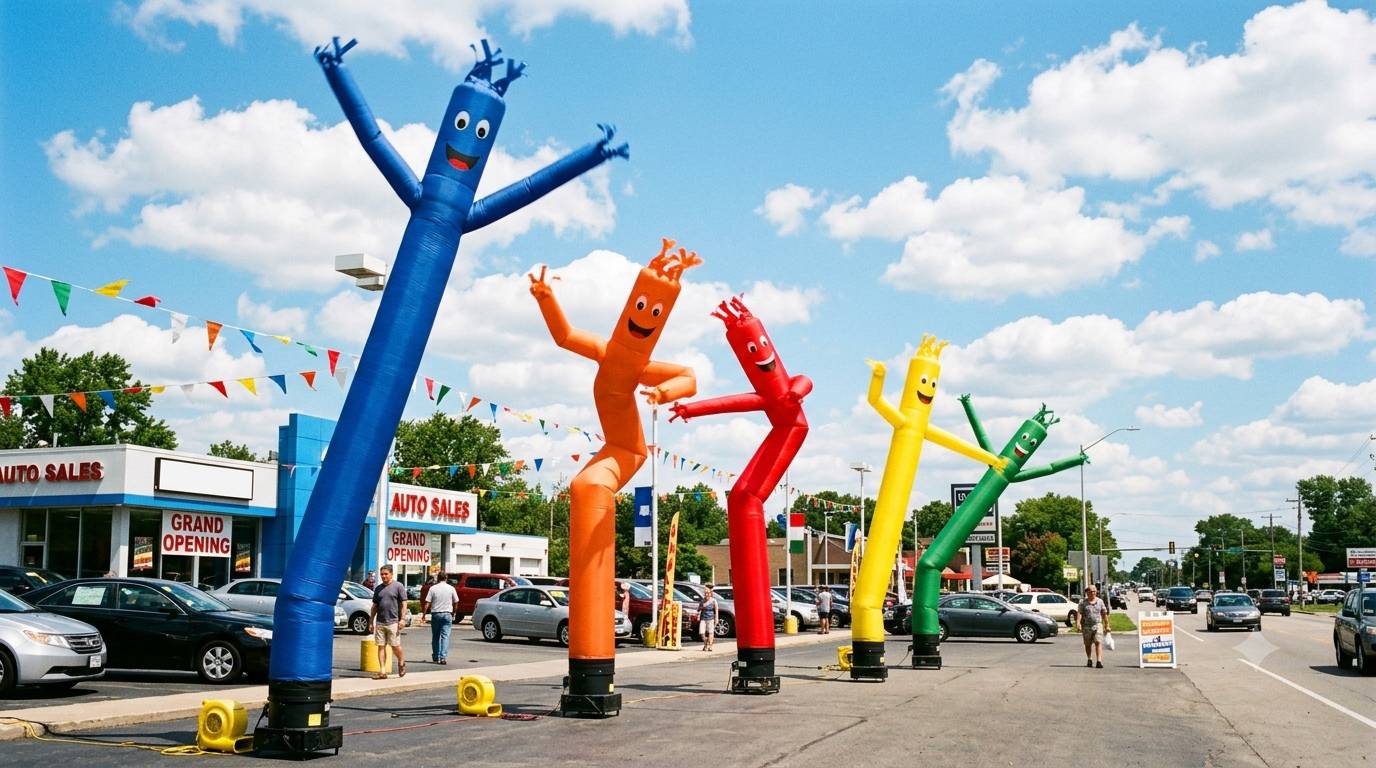
Independent retailers rarely have the advertising budgets of national chains, but they do have one valuable asset: their physical location. A well-planned forecourt can attract pedestrians, cyclists and passing drivers before they notice competing businesses. Moving displays, strong colours and simple messages often perform better than cluttered promotions. Branded air dancers can create long-distance visibility, while signs, product displays and seasonal details help explain what is available inside. The aim is not to fill every open space. It is to create a clear, safe and appealing route towards the entrance. Small improvements can make a shop easier to notice and remember.
1. Display One Strong Daily Offer
Choose one product, service or price message and place it where approaching customers can read it quickly. Keep the wording short and use large, high-contrast lettering. Change the offer regularly so repeat passers-by have a reason to look again.
2. Use a Branded Pavement Sign
A sturdy pavement sign can communicate opening hours, new stock or a limited promotion. Position it without blocking pedestrians, wheelchairs, pushchairs or doorways. Check local rules before placing promotional equipment on public pavement space.
3. Create a Clear Route to the Entrance
Remove unnecessary boxes, stands and conflicting signs. Customers should see the doorway immediately and understand how to reach it. A clean route makes the premises appear organised, accessible and open for business.
4. Put Popular Products Outside
Where weather, security and local regulations allow, display a small selection of attractive products near the entrance. Choose items that are easy to understand at a glance. Keep the display tidy and refresh it before it begins looking handled or incomplete.
5. Add Colour That Matches the Brand
Repeat the shop’s main colours across signs, planters, flags or display materials. Consistent colour helps people connect the forecourt with the business. Two or three coordinated shades usually look stronger than several unrelated colours competing for attention.
6. Introduce Movement on Promotion Days
Movement catches the eye more quickly than a static display. Branded air dancers can be produced in corporate colours with logos or text, making them useful for openings, sales and outdoor promotions. They require electricity, a stable surface and suitable weather conditions.
7. Promote a Simple In-Store Reward
Give customers a clear reason to cross the threshold. A small same-day discount, free sample or loyalty-card stamp can work when the offer is easy to understand. State any conditions clearly so customers do not feel misled after entering.
8. Use Seasonal Themes Carefully
Link the forecourt to recognised seasons, local celebrations or shopping periods. A few well-chosen decorations create more impact than a crowded theme. Replace damaged or outdated material quickly, as neglected displays can weaken trust in the shop itself.
9. Improve Lighting Around the Door
Good lighting helps products, prices and opening information remain visible in dull weather and during shorter winter days. Use lighting suited to outdoor conditions and keep cables away from walking routes. The entrance should feel welcoming rather than harsh or overlit.
10. Make Opening Status Obvious
Customers should never need to guess whether the shop is open. Use a clean, visible sign near the entrance. A moving promotional display carrying an “Open” message can support visibility, but it should not replace accurate hours shown clearly at the door.
11. Work With Nearby Businesses
Coordinate a shared shopping day, local trail or cross-promotion with neighbouring independent retailers. Each business can advertise the same simple message outside. Joint activity gives shoppers more reasons to visit the area without requiring one retailer to fund the whole promotion.
12. Measure What Brings People Inside
Track footfall during different forecourt promotions. Note the date, weather, offer and display used, then compare store visits or sales. Simple observation helps identify which ideas deserve repeating and which are adding clutter without producing useful results.
Wrapping up
Effective forecourt marketing does not depend on expensive installations. Clear signs, coordinated colours, selected products and a strong entrance can make an independent shop easier to notice. Each element should have one purpose, whether that is attracting attention, explaining an offer or directing customers towards the door.
Safety and access must remain central. Keep walking routes clear, secure outdoor equipment and check permission requirements. Weather conditions, electrical access and nearby traffic should guide where promotional materials are placed. Measuring footfall will show which ideas earn attention and which merely occupy space.
The strongest forecourts combine a static message with one memorable feature. Used on suitable days and positioned responsibly, branded air dancers can provide movement and long-distance visibility while the surrounding signs explain the reason to visit. That simple combination can help small retailers compete for attention without depending on a large advertising budget.


