
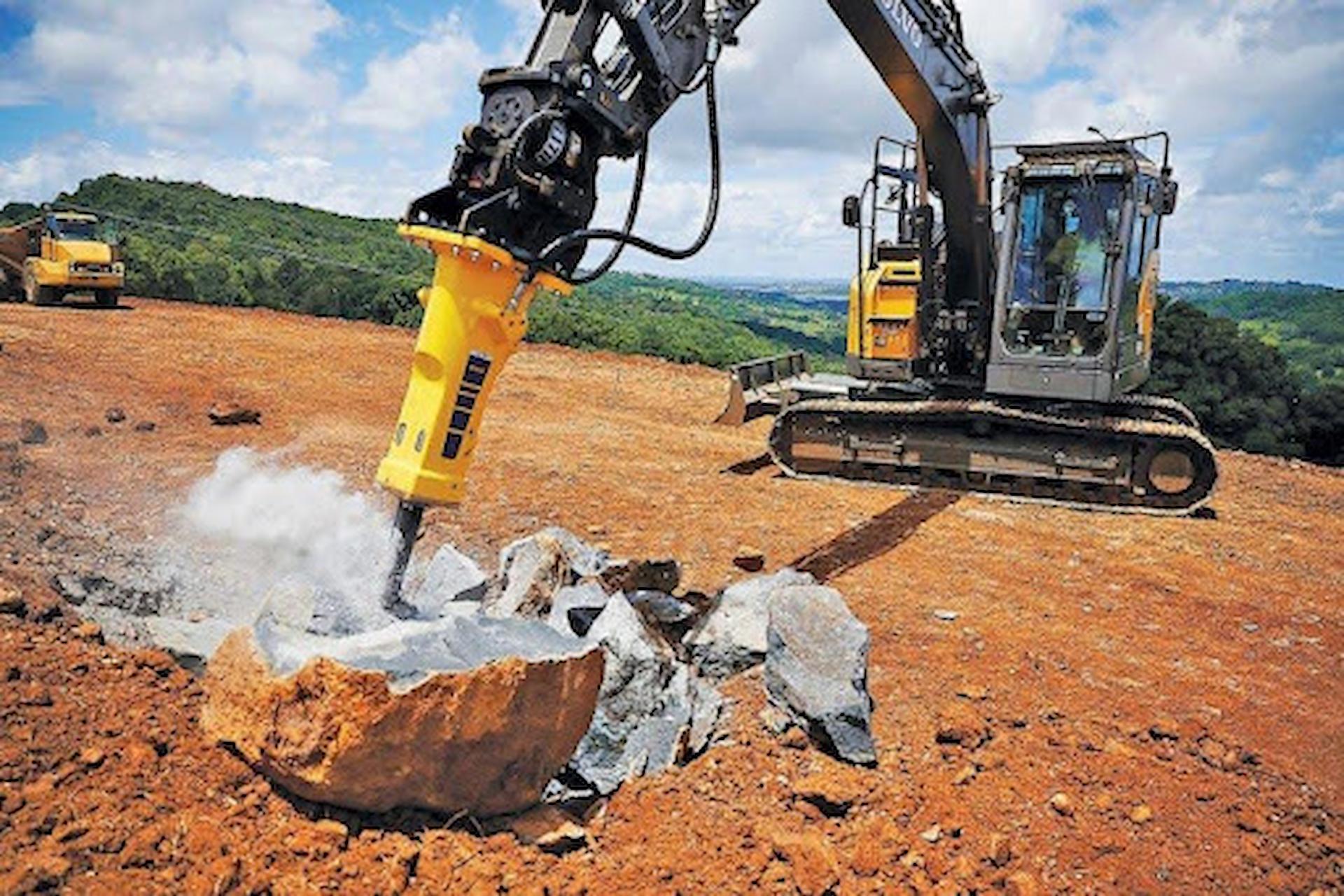
Hard rock dictates the pace of mining and construction long before structures rise or ore is extracted. When drilling and excavation stalls, controlled mechanical breaking determines whether work slows or advances safely. Applied with precision, this process shapes excavation profiles, protects surrounding ground, and keeps heavy operations moving through the toughest material layers.
Breaking through hard ground is rarely straightforward. In mining and construction, progress depends on the ability to manage rock that resists conventional excavation methods. When digging equipment reaches its limits, controlled mechanical breaking becomes essential. This is where rock breakers play a critical role, allowing operators to fracture dense material with precision rather than disruption.
By applying focused energy exactly where resistance occurs, these systems support safer excavation, protect surrounding structures, and maintain steady workflows. Their use reflects a broader shift in modern projects toward accuracy, predictability, and efficiency—qualities that are increasingly vital as sites become more complex and operating margins tighter.
When Excavation Meets Its Hardest Limit
Mining and construction projects often advance smoothly until solid rock interrupts progress. Soil-moving equipment is designed for displacement, not fracture, which makes dense or compact rock a critical obstacle. At this point, rock breakers become a functional necessity rather than a supporting tool.
Their role is to apply focused energy exactly where resistance occurs. Instead of disturbing large areas, controlled breaking isolates the problem material and resolves it without compromising surrounding ground stability. This approach allows excavation to continue without redesigning workflows or introducing higher-risk methods.
Why Precision Outperforms Force
Uncontrolled breaking can cause cracking beyond the target area. Precision ensures only the intended material is fractured, protecting nearby structures and maintaining excavation integrity.
Turning Hydraulic Power Into Directed Impact
The effectiveness of rock breaking lies in how energy is delivered, not simply how much force is applied. Most systems rely on hydraulic pressure, which converts fluid energy into repeated, high-frequency impacts. Each strike concentrates power onto a narrow point, allowing rock to fracture progressively.
This repeated impact method avoids sudden failure. Operators can adjust energy output based on resistance, ensuring the rock breaks predictably rather than violently. The result is controlled fragmentation that supports both safety and efficiency.
How Hydraulic Systems Maintain Consistency
Hydraulics provide steady force regardless of load variation. This consistency allows predictable breaking performance even when rock density changes across the excavation area.
Managing Rock Size Is Central to Mining Efficiency
In mining operations, the challenge is not just breaking rock but producing fragments that can be handled, transported, and processed efficiently. Oversized material can disrupt haulage systems and slow downstream operations.
Controlled breaking reduces material to usable dimensions at the source. This keeps extraction flowing and avoids delays caused by secondary reduction. Consistent fragmentation also reduces stress on crushers and conveyors, supporting smoother overall operations.
Stability Is as Important as Speed
Controlled breaking limits unexpected collapses or wall damage, helping maintain long-term structural stability within active mining zones.
Construction Accuracy Depends on Controlled Removal
Construction environments often demand exact excavation profiles. Foundations, roadbeds, and service corridors must meet strict dimensional requirements. When hard rock interferes, removal must be deliberate rather than aggressive.
Rock breaking tools allow crews to shape excavation areas gradually. This avoids overcutting and preserves load-bearing surfaces. Precision removal supports compliance with design tolerances and reduces corrective work later in the project.
Protecting What Lies Beneath and Around
Controlled impact minimises vibration, reducing the risk to nearby utilities, reinforced structures, and adjacent construction elements.
Selecting the Right Energy Profile for the Ground
Rock characteristics vary widely, even within the same site. Density, layering, and moisture content all influence how material responds to impact. Equipment must be matched carefully to these conditions to avoid inefficiency or damage.
Midway through excavation phases, rock breakers offer flexibility by adapting to changing ground conditions without replacing core machinery. This adaptability keeps operations continuous and avoids downtime caused by tool mismatch.
Balance Prevents Wear and Waste
Excessive force accelerates tool wear, while insufficient impact slows progress. Correct energy matching ensures steady performance and longer equipment life.
Operational Benefits Extend Beyond Breaking
Controlled rock breaking contributes to broader operational efficiency. Predictable fragmentation improves material handling, while reduced vibration protects adjacent machinery and structural elements.
Lower mechanical stress means fewer interruptions for maintenance. Over time, this translates into more reliable schedules and reduced operational uncertainty. These gains are especially valuable in projects where timing and coordination across teams are critical.
Consistency Supports Planning
Reliable breaking performance allows better forecasting of excavation timelines and resource allocation.
Safety Is Engineered Into the Process
Rock breaking prioritises controlled failure rather than sudden collapse. Gradual material separation reduces the likelihood of flying debris or unexpected shifts. Operators remain at a safe distance, maintaining visibility and control throughout the process.
Predictability is the foundation of safety. When rock behaves as expected, work zones remain stable, and risk is significantly reduced.
Reducing Uncertainty Reduces Risk
Controlled energy release prevents sudden material movement, protecting both personnel and equipment.
Final Thought
Hard ground will always resist progress, but how it is addressed determines efficiency, safety, and long-term success. By combining controlled force with precision delivery, rock breakers transform immovable obstacles into manageable material without compromising surrounding structures or workflows.
For mining and construction projects facing challenging ground conditions, controlled breaking offers a practical, reliable solution. It supports steady progress, protects assets, and aligns excavation work with modern safety and efficiency standards. Choosing the right breaking approach is not just a technical decision—it is a strategic one that shapes project outcomes from the ground up.How Rock Breakers Are Used in Mining and Construction


